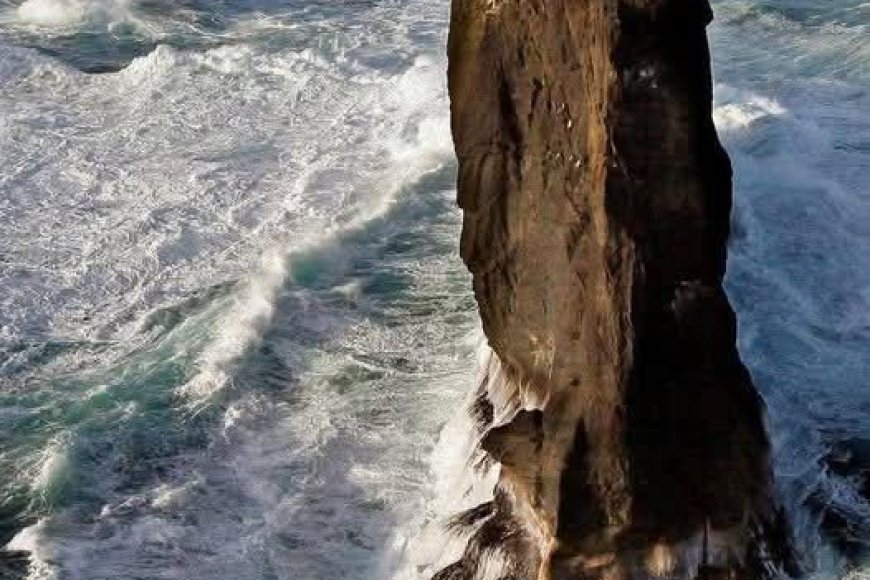
Perched atop the tallest of three sea stacks known as Þrídrangar (“three pillars”) some six miles off Iceland’s southern coast, the Þrídrangar Lighthouse stands as one of the world’s most remote and dramatic beacons. Built in 1939 on a sheer basalt pinnacle rising nearly 30 meters above the tumultuous waves, this solitary tower has guided mariners through the treacherous waters around the Vestmannaeyjar archipelago for more than eight decades.
Geology and Location
Þrídrangar’s three sea stacks are the eroded remnants of an ancient lava flow, sculpted over millennia by wind, ice, and powerful Atlantic swells. The highest stack—where the lighthouse perches—is accessible only by helicopter or by expert climbers at low sea state. During winter storms, waves slam against the cliff face in towering surges, making any landing all but impossible.
A Beacon Born of Necessity
In the early 20th century, increased shipping traffic between Reykjavík and continental Europe highlighted a deadly hazard: uncharted submerged rocks hidden by fog and darkness around the Vestmannaeyjar islands. After two maritime disasters in 1937 claimed over 40 lives, the Icelandic coastal authority commissioned a light station on Þrídrangar.
Engineering Against the Elements
Constructing a lighthouse on a near-vertical sea stack posed extraordinary challenges:
-
Logistical Feats: All building materials—concrete, steel, generators, and living provisions—were first ferried by boat to a landing ledge, then hauled by block-and-tackle up the cliff face.
-
Structural Design: Engineers designed a tapered cylindrical tower of reinforced concrete, its narrow base keyed deep into natural fissures. The lamp room and living quarters occupy a single compact deck, barely larger than a tennis court.
-
Self-Sufficiency: Originally powered by diesel generators and propane heaters, the station housed two keepers on rotating shifts. In 1988 the light was electrified and automated, but a small emergency shelter and supplies remain for periodic maintenance crews.
Life on the Pillar
For the lighthouse keepers of Þrídrangar, isolation was the rule: months would pass between visits from supply vessels or technicians. They logged sea conditions, maintained the Fresnel lens, and radioed weather reports to Reykjavík. During winter gales, the stack would shudder under wave impacts, and the constant spray left the tower painted in salt crystals like a whitewashed sculpture.
Automation and Preservation
Automated in 1988 and unmanned since, Þrídrangar now relies on remote monitoring. Solar panels augment its power, and a backup battery ensures the 1,000-watt xenon beacon continues to flash every ten seconds, visible up to 18 nautical miles. Iceland’s Coast Guard conducts annual inspections by air, replacing corroded fittings and reinforcing the concrete against erosion.
A Symbol of Resilience
Today, Þrídrangar Lighthouse captures the imagination of photographers and adventurers worldwide. Its isolation and stark beauty symbolize human determination to bring safety to even the most inhospitable reaches of the sea. As climate change stirs more frequent and violent North Atlantic storms, this slender tower on a basalt pillar remains a steadfast guardian—proof that, even in extreme isolation, ingenuity and courage can light the way.
