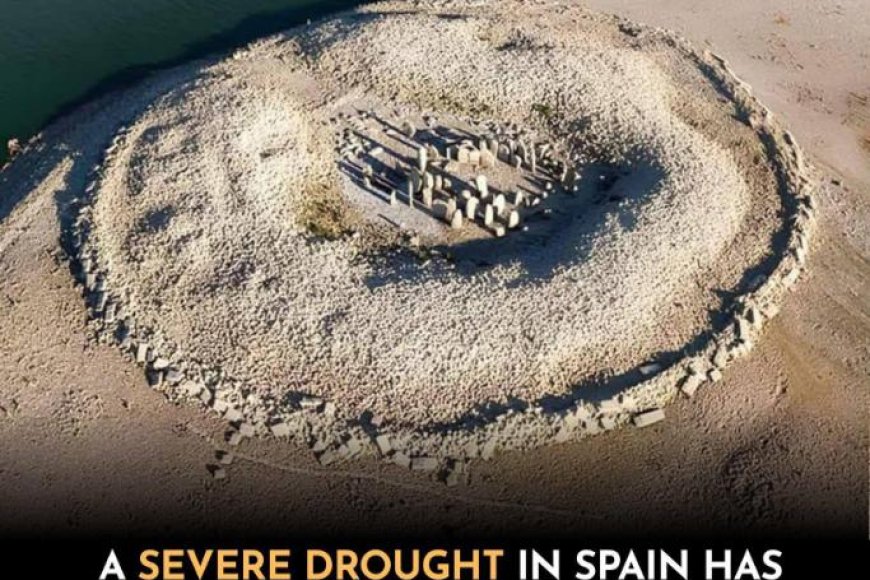
A Monument Reclaimed by the Elements
In the grip of an unprecedented drought, the waters of Spain’s Valdecañas Reservoir have receded to reveal in full view the Dolmen of Guadalperal—a megalithic complex dating to around 5,000 BC, or roughly 7,000 years ago. Once dubbed the “Spanish Stonehenge,” this ring of standing stones briefly re-emerged as local water levels plummeted, offering archaeologists and antiquity-lovers alike a rare glimpse of one of Europe’s oldest ritual sites.
Origin and Early Study
Originally erected on the banks of the Tagus River in the mid-Neolithic period (5th millennium BC), the Dolmen of Guadalperal consists of some 150 granite orthostats arranged in an ovoid chamber approximately 5 m in diameter, preceded by a 21 m access corridor. A towering menhir at the entrance bears enigmatic carvings—possibly a stylized map of the nearby river—suggesting sophisticated symbolic intent among its builders.
German archaeologist Hugo Obermaier led the first scientific excavation in 1926–27, documenting axes, pottery shards, and evidence of a contemporary settlement. Though these findings were not published until 1960, they firmly established the site’s ritual and funerary significance.
Submergence under Franco’s Modernization
In 1963, amid a wave of hydroelectric and irrigation projects under Francisco Franco’s regime, the valley housing the dolmen was flooded to create the Valdecañas Reservoir. Little attention was paid to cultural heritage at the time, and the monument sank beneath the waters—its stones peeking above the surface only in years of extreme drought.
Rediscovery in the 21st Century
Though occasional low water marks revealed snippets of stone tips, it was not until the European “mega-drought” of 2019 that the entire complex resurfaced, captured in NASA satellite imagery. Now, a second bout of severe drought has once again laid bare the ovoid ring and access corridor, allowing for the first time in half a century a complete in-situ survey.
Significance and Conservation Challenges
-
Chronological Primacy: At roughly 7,000 years old, the Dolmen of Guadalperal predates both the earliest Egyptian pyramids and Stonehenge by some 2,000 years, underscoring Iberia’s central role in the spread of megalithic traditions
-
Ritual Function: The enclosed chamber likely served both funerary and ceremonial purposes, with its alignment and iconography hinting at solar or river-based worship.
-
Fragile Legacy: Decades underwater have eroded many carvings and raised urgent questions about the dolmen’s long-term preservation. Local advocacy groups are calling either for its careful relocation or for a protected, in-reservoir conservation plan to shield the stones from further decay.
Looking Ahead
As climate change intensifies extremes, the Dolmen of Guadalperal stands as both a victim of modern development and a testament to the endurance of human ingenuity. Its unexpected reappearances offer invaluable research opportunities—but also a stark reminder that without proactive conservation, some chapters of our shared past risk slipping back beneath the waves, perhaps forever.
